NEWSNEWS I2P INFOI2P SOFTWARESOFTWARE MOVING SPOTSMOVING SPOTS PRACTICEPRACTICE


Some Observations on the Controversy

on »Software Patents«

PA Axel H Horns1

(Originally published in epi information 1/2001 p. 31-35)


1. New players introducing themselves

The Munich Diplomatic Conference on the Revision of the EPC had closed on November 29, 2000 after having decided that programs for computers are not to be deleted from the list of non-patentable subject-matters listed in Article 52 (2) (c) EPC; a respective provision of the »Basic Proposal« had been overruled by 16 of 20 votes. Ralph Nack and Bruno Phélip wrote in their report for AIPPI:

"At the Diplomatic Conference, France, Denmark, and Germany proposed to postpone the deletion of computer programs and all other EC member states except for Austria supported this proposal. The background of this initiative were the massive protests against software patents by a number of software developers."2

What had happened? First drafts of the »Basic Proposal« did exhibit strong confidence that at least the computer software clause should be removed from Article 52. But eventually this attempt failed due to a vast majority of the EPC member states votings, and it will depend on the view to be taken by the EU whether or not such amendment will pass a »second basket« conference to be held later in 2002. Allegedly this move was caused by some public uproar of activists, namely of the »Open Source Software« (OSS) scene,3 fearing that removal of said clause would open the gates for a flood of unwanted software patents.4

Obviously, political matters in the field of IP have created more and more public awareness compared with years before. Groups have introduced themselves into the arena which did not even exist before. Their main medium is the Internet. Hence, now we have a somewhat divided public with regard to IP matters:

  • On the one hand, there are well-known established groups like governments, professional organisations and academic research institutes. These groups traditionally have their own traditional paper-based communication channels and do not act primarily in the public spaces newly created by the Internet.

  • On the other hand, a bunch of Non-Governmental Organisations (NGOs) have little or no connection to the said traditional paper-based communication channels but make creative use of the Internet.

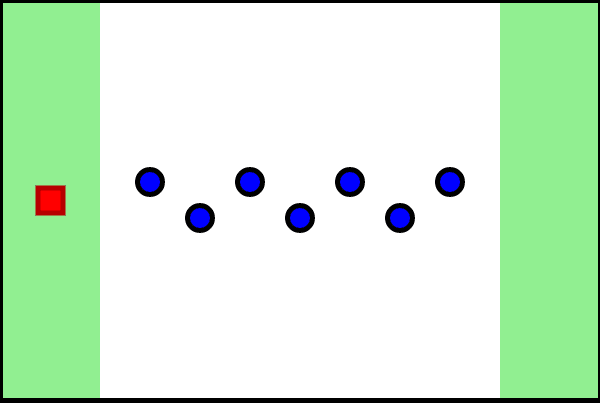
As a matter of fact, journalists and even politicians like MPs (or, at least, their secretaries) more and more get savvy with Internet usage and can be reached by the particular part of the public which prefers to express their ideas and opinions in the »Cyberspace«. Moreover, NGOs can gain a lot of organisatorical power at very low cost on an international scale by utilising the Internet.5 Therefore, I conclude that it is of urgent importance that in particular members of the IP professions including professional representatives before the EPO get more aware of the developments perceivable only in the on-line world of the Internet. The current situation can roughly be sketched as follows:

2. The EuroLinux coalition

In 1999, when the preparatory work for the Diplomatic Conference was underway, a number of activists mainly organised via the Internet under the umbrella of the Eurolinux Alliance6 started activities against patentability of software-related inventions. Members of the Eurolinux Alliance are:

  • FFII e.V.; "Förderverein für eine Freie Informationelle Infrastruktur", Germany7

  • AFUL; "French Speaking Association of Users of Linux and Free Software", France8

  • APRIL; "Association Pour la Recherche en Informatique Libre", France9

  • Italian Initiative Against Software Patents, Italy10

There are a number of sponsors from the commercial sector, among them some wide known software companies:11

  • SuSE AG, Nuremberg (Major LINUX Distributor)

  • Innominate AG, Berlin (LINUX Support Services)

  • Phaidros Software AG, Ilmenau (UML-based Software Engineering)

and numerous others.

The most prominent action undertaken by this coalition was the so-called »Eurolinux Petition for a Software Patent Free Europe«:12

"This petition is directed to the European Parliament. Its goal is to warn European Authorities against the dangers of software patents. This petition is supported by the EuroLinux Alliance together with European companies and non-profit associations. Please make this petition well known to everybody concerned.

  • I am concerned by current plans to legalise software patents in Europe, considering their damaging effect on innovation and competition.

  • I am concerned by the possible use of software patents to patent business methods, education methods, health methods, etc.

  • I am concerned by the current track record of abuses from the European Patent Office, especially by their tendency to abuse their judicial power to extend the scope of patentability.

  • I am surprised that no economic report has ever been published by European Authorities to study the impact of software patents on innovation and competition.

  • I urge decision makers at all levels in Europe to enforce the Law, which clearly prohibits patenting pure computer programs, instead of changing it.

  • I urge decision makers at all levels in Europe to reconsider their current plans and to make sure patents are not abused to prohibit or restrict the dissemination of computer programs and intellectual methods."

The petition is open for endorsement by everybody. Provided by Eurolinux is a HTML web form where full name, address and job position are to be entered by all those who want to support this motion. Eurolinux claims to have gathered more than 60,000 entries at the end of the year 2000 and the petition list has not been closed up to now.

In view of the allegations set out in the petition, Eurolinux was in particular rather successful to deliver to the public a message saying that the EPC presently does not allow software patents and, hence, the current practice of the EPC is blatantly illegal. Consequently, the proposed amendment to Article 52 was said to be a statutory change allowing such software patents so that in future the current daily practice can be made legal. Although this position is completely wrong as can be seen from the precise wording of the EPC as well as from the arguing set out in various decisions of the Office, many computer experts, journalists and even politicians shared this view, at least as far as can be seen in the in the German press. One reason for the quantity of resonance as well as for the broad and willing public reception of the Eurolinux position was that patent law is indeed very complicated and very few efforts have been done to explain its implications to a broader public in the past.

Moreover, several e-mail discussion lists on software patents have been opened, one of them e.g. by FFII.13,14 Regardless on whether it was deliberately made due to tactical reasons or inadvertently due to true cluelessness, the major and striking impression of the dialogues happening there is that the anti-patent activists do not have any substantial knowledge of the basic concepts of patent law, and some of those behave as if they might even be proud thereof. Few German patent attorneys had joined the list and started to attempt to explain the law but nevertheless all efforts to reach a mere formal common understanding of the problems related to patenting software-related inventions seem to be in vain. For example, a number of activists did not even know that there is a difference between European "A" Documents exhibiting patent applications as filed by the applicant, on the one hand, and "B" documents exhibiting patents as granted by the EPO, on the other hand. Still after having been told of this difference, they started advertising an on-line "Gallery of Horror" with examples of alleged bad patent practise.15 However, a closer inspection uncovered that the ultra-broad patent claims which were presented as if granted by EPO and quoted there had actually been taken from "A" documents.16 It took additional weeks until said activists eventually decided to take down the non-granted claims from their web site and replace them by properly granted wordings. I tell this here for not to speak of the insurmountable hurdles to gain a common ground of understanding of concepts like »technical invention« or the like during the e-mail dialogue. The lack of any common language was striking.

In particular, FFII e.V. was very busy in 2000 to promote a draft concept for amendments to patent law:17

  • "Freedom to Publish original Information Works: Rights derived from patents may be used against the industrial application of computer programs but not against their publication or distribution. This can be achieved by a simple modification of national law.

  • Freedom of Access to Communication Standards: When someone "sets standards" using software market power, these standards must be free of private claims. Representants of public functions have to base their communication with citizens on open standards.

  • Precisation of Patentability Criteria: The Lawmaker passes a resolution stating a consistent and concise interpretation of Art 52 EPC and corresponding articles of national law. As far as necessary, lawcourts are brought back on the path of this interpretation, which represents the original spirit of the law, by explanatory amendments to patent laws.

  • Adequate systems for promotion of information innovation: Adequate systems for stimulating and rewarding information innovations and other mental labour are to be devised. This may mean a combination of soft exclusion rights, voting-based rewarding systems and a stronger public commitment to the funding of research and education.

  • Debureaucratisation and Internationalisation of the Patent System: It is made possible to register patents instantly and free of charge by publishing them according to standardised requirements on the Net. On the other hand, a market for patentbusters is created. The polluter-pays-principle is established: the costs of the patent system are born by the owners of unjustified patents."18

These views were not only distributed via Internet channels but also covered by lobbying letters sent by mail to dozens of politicians. The FFII proposals in their details would mean that statutory criteria for patentable subject-matters would be set extremely narrow, blocking not only patenting of software-related inventions but also other inventions which theoretically could have been obtained by exercising brute computing force:19

"A 'technical' process is one that uses natural forces to directly cause a transformation of matter. Objects that contain both technical and non-technical features are inventions only if the part that is claimed to be new and inventive, i.e. the core of the invention, lies in the technical realm. A technical process controlled by a computer program on known hardware is an invention if and only if it uses natural forces in a new way to directly cause a success in production of material goods that could not have been predicted by mere computation based on prior knowledge."

The public sector would be discouraged from providing substantial patent examination services to the public:20

"It is made possible to register patents free of charge without examination and without annual fees by a standard-conformant publication in the Internet. Such patents become valid immediately upon registration. In return, additional incentives for patent invalidation proceedings are created. If someone succeeds in invalidating or narrowing a patent, he receives, in addition to the reimbursement of litigation costs, an attractive incentive payment from the owner of the bad patent. Instead of the long and ineffective official examination, a private professional group of patent busters shall protect the public from invalid patents. The official examination continues to exist, but is conducted only at the request of the applicant. It can be conducted either by the patent office or by certified examination institutes at home and in foreign countries."

Obviously FFII seems to be unaware of the existence of utility models. Moreover, in the proposed FFII system, the general public would not be able to get authoritative advice on enforceable patents because of they are scattered all around the Internet. Furthermore, the incentive payment would impose a huge financial risk in particular on small and medium entities (SMEs). In total, the FFII proposal is practically unworkable in its details and seems to be designed to restrict the patent system into a limited niche area of the information society. Supporters for such initiatives are not only recruited from the scene of OSS activists but also from commercial entities which, for whatever reasons, have decided not to participate in the patent system but to fight against it.

3. The role of OSS

However, it is important to obtain a proper understanding of the role of »Open Source Software« (OSS) in the patent debate. Open Source does not just mean that merely the source code of a piece of software is open to the public. The concept of Open Source also comprises that everyone is entitled to make free use of the software including creation of derivative works.21 As a matter of fact, OSS is an impressive success story.22 But why should OSS activists be privileged in view of patent law? I do not give legal arguing here.23 There is a certain political implication which should be taken well into account. The European Union in general and the German government in particular are eager to promote e-commerce over the Internet in order to boost their economical situations. However, consumers and other trade circles show a somewhat reluctant attitude towards this new way of running an economy. From polls it is well known that consumers as well as business professionals lack sufficient confidence in the software basis of e-commerce. They fear malicious functions deliberately implemented e.g. by the software vendor. And, experts say that fostering OSS might be a suitable way to overcome this problem.24 There is no theory saying that each and every end user of OSS should inspect the source code thereof in order to uncover bugs and malicious code before using it. This would be completely unrealistic simply because of few people have sufficient knowledge. But nevertheless and as a matter of fact there is a sufficient number of experts in the field not bound by loyalty to a certain government agency or a certain company forming some kind of informed and competent public exercising all scrutiny when working on the source code. Hence, it is believed that it would be very difficult to introduce malicious code e.g. into the LINUX kernel sources.25,26 This message has been recognised on the political stage. For example, the European Union27 as well as the German government28 are now supporting and funding OSS projects.29 In particular, the German Secretary for Economical Affairs had made significant efforts to foster the debate on the implications of OSS, also in particular with regard to the patent system.30,31

It should be understood that it would not be a good starting position for IP professionals to shrug the shoulders when the political debate comes to the topic of the potential threat to OSS in view of possible legal action by patent holders against OSS activists e.g. based on alleged contributory infringement by means of sending OSS around the globe using the Internet. If politicians tend to love OSS they do so due to reasons which are well beyond the scope of particular political goals in the IP field. Moreover, as a matter of fact, the political issues around OSS are not severely affected by any observations regarding the question whether or not OSS tends to be more innovative than proprietary software. The role of OSS in the current debate on the shape if the information society is not that of an outstanding source of technical inventions. The innovative role of OSS is simply due to the effects of its license model.32

4. The big threat to come

The public dispute on patenting of software-related inventions together with the controversy on biotechnology patenting spark and fuel other discussions concerning the role of the current patent system in its entirety:

  • On the one hand, the patent system is seen as an instrument to restrict free competition on the market by a system of monopolies. Hence, some critics argue that patents should be allowed only to the extent that the overall economical benefits outweigh its costs. This is the neo-liberal critics of the patent system.33,34,35,36,37,38

  • On the other hand, the current patent system is seen as an instrument of globalised hypercapitalism in the hands of big business. This is the anti-capitalist critics of the patent system.39

Obviously both kinds of criticism taken together are quite contradictory. Nevertheless, some activists seem to argue on both tracks. Politicians might, depending on the stakes of their respective supporters, be readily prepared to adopt such criticism if they can improve their own position. Hence, it would not be very surprising if we would see an emerging general patent debate in this decennium, not unlike the other general patent controversy40,41 of the nineteenth century.

My wish is that more patent professionals will be well aware of the ongoing debate, in particular on but not limited to the Internet, on the question of the macroscopic economical benefits of the patent system. And probably it would be a good idea to make suitable contributions to said controversy. Otherwise, other groups will rule the field. It should not be too much difficult to demonstrate positive overall economic effects of granting patents on proper innovations deserving this label. With regard to, for example, the pharmaceutical sector this task seems to be rather trivial but perhaps the IT sector is different. To this end, the effect of patents on the software market should be analysed carefully.42 Maybe different segments of the software markets have to be treated separately:

  • Software which is visible per se on the end user market, e.g. office software etc., and

  • Software which runs on embedded systems and which, hence, is not visible per se on any end user market but is sold only as part of other goods, e.g. mobile phones etc.

Under any circumstances ill-considered and unworkable amendments of the substantial conditions for patenting in Article 52 EPC further restricting patentable subject-matters as desired by Eurolinux Alliance should be avoided because of they would severely harm the patent system in its entirety. Any problems caused in the context of patents in the field of IT, in particular in conjunction with OSS, might better be solved by carefully redesigning the effects of granted patents.

* * * * * * *


1The author's e-mail address is horns@ipjur.com

2Ralph Nack and Bruno Phélip in "AIPPI Report on the Diplomatic Conference for the Revision of the European Patent Convention"; available on-line under http://www.aippi.org/reports/report-EPO-Dipl.Conf.htm

3See Ilkka Tuomi: "Internet, Innovation, and Open Source: Actors in the Network"; on-line under
http://www.firstmonday.org/issues/issue6_1/tuomi/index.html

4Software patents stay banned in Europe - for now. By: Graham Lea, The Register, Posted: 22/11/2000 at 16:15 GMT; on-line via http://www.theregister.co.uk/content/archive/14933.html

5See Giorgio Di Pietro, IPTS, "NGOs and the Internet: Use and Repercussions"
http://www.jrc.es/pages/iptsreport/vol48/english/TRA3E486.htm

6EUROLINUX Alliance self-defining as "The EuroLinux Alliance for a Free Information Infrastructure is an open coalition of commercial companies and non-profit associations united to promote and protect a vigourous European Software Culture based on Open Standards, Open Competition and Open Source Software such as Linux. Corporate members or sponsors of EuroLinux develop or sell software under free, semi-free and non-free licenses for operating systems such as GNU/Linux, MacOS or Windows."; available on-line under http://www.eurolinux.org/ since June 17, 1999.

7FFII e.V. self-defining as "Ein gemeinnütziger Verein, in dem Projektgruppen für GNU/Linux, FreeBSD, Java, Schnittstellenspezifikationen, Normen, Lexika, Enzyklopädien, Fonts und sonstige gemeinnützige Informationswerke arbeiten können. Gemeinnützigkeit macht unsere Satzung an Merkmalen wie Schnittstellenoffenheit, Quellenoffenheit und freie Verfügbarkeit fest." See on-line under http://www.ffii.org/

8AFUL self-defining as "L'AFUL est l'Association Francophone des Utilisateurs de Linux et des logiciels libres. C'est une association loi de 1901 dont l'objectif principal est de promouvoir, directement ou indirectement, les logiciels libres et en particulier les systèmes d'exploitation libres, principalement ceux basés sur les normes POSIX ou dérivées, dont le plus connu est le système Linux muni de l'environnement GNU (article 2 des status)." See on-line under http://www.aful.org/

9APRIL self-defining as "L'Association pour la Promotion et la Recherche en Informatique Libre (APRIL) est une association à but non lucratif [...]. L'association a pour objet d'engager toute action susceptible d'assurer la promotion, le développement, la recherche et la démocratisation de l'informatique libre. [...]" See on-line under http://www.april.org/

10"Contro i brevetti del software - L'uso dei brevetti è in crescita nel mondo. Gli uffici dei brevetti sono sempre più pronti ad accettare nuove forme di monopolio. Adesso si sta aggiungendo la pratica di rilasciare brevetti sul software, che renderà la vita molto difficile agli sviluppatori di software libero." http://no-patents.prosa.it/index.en.html

11See the list of sponsors under http://petition.eurolinux.org/signatures.html

13An archive of this e-mail discussion list is available under http://swpat.ffii.org/archive/mails/swpat/

14A corresponding e-mail discussion list maintained by AFUL is available under
http://www.aful.org/pipermail/patents/

17Literally quoted text portions; English language grammar problems also in the original website.

21See e.g. the classical definition under http://www.gnu.org/philosophy/free-sw.html

22Steve Lohr: "Code Name: Mainstream – Can 'Open Source' Bridge the Software Gap?"; New York Times 2000-08-28; on-line via
http://www.nytimes.com/library/tech/00/08/biztech/articles/28code.html

23A brief discussion of the relationship of free speech and patent law with regard to OSS is presented in my paper "Der Patentschutz für softwarebezogene Erfindungen im Verhältnis zur "Open Source"-Software", on-line under http://www.jurpc.de/aufsatz/20000223.htm

24See e.g. Bernd Lutterbeck et al.: "Sicherheit in der Informationstechnologie und Patentschutz für Software-Produkte - Ein Widerspruch?"; on-line available under
http://www.sicherheit-im-internet.de/download/Kurzgutachten-Software-patente.pdf

25Kristian Köhntopp et al.: "Sicherheit durch Open Source? Chancen und Grenzen"; Datenschutz und Datensicherheit (DuD) 9/2000 pp. 508-513

26Brendan I. Koerner: "The World's Most Secure Operating System"; on-line via
http://www.thestandard.com/article/display/0,1151,17541,00.html

27See e.g. "European working group on libre software"; on-line under http://eu.conecta.it/

28For example, the Berlin Open Source Software Competence Center (http://www.berlios.de) is co-funded by the German Secretary for Economical Affairs; cf. on-line
http://www.sicherheit-im-internet.de/themes/themes.phtml?ttid=2&tsid=162&tdid=553&page=0

29There is a further implication which is utmost sensitive and discussed behind closed doors, if so at all. The European economy as well as the public sector strongly depend on PC operating systems and office software from a single quasi monopolist vendor seated in the U.S. What if this vendor would voluntarily or under pressure co-operate with the competent U.S. Government Agencies to implement hidden functions into the closed-source software? It is clear that no official statements exist in this regard. But, not very surprising, the public is willing to make its own thoughts on every suspicious fact which has come to the surface; c.f. e.g. Thomas Greene: "Microsoft collaborating with US spymasters", posted: 05/09/1999 at 09:26 GMT, on-line under
http://www.theregister.co.uk/content/archive/6598.html
Taken these reported facts for granted, European politicians wold have no other choice than to establish a system for ensuring production of inspectable software which cannot be controlled by foreign powers. From this point of view, OSS policy has some contact points with national and regional security and economical well-being.

32Nevertheless, caution should be exercised when analysing statements like that of Linus Thorwalds downplaying technical innovations in the context of the LINUX operating system based e.g. on an interview "Linus Thorwalds: 'Der Markt ist ein strenger Lehrer'" in: Computerwoche 41/2000, pp. 9-10: "Technisch ist in Linux kaum etwas radikal Neues. Was Betriebssysteme heute machen, ist im Wesentlichen alles schon in den 60er Jahren entworfen worden". It is most probably common sense among members of the LINUX developer community that patent offices exhibit bad practise by allowing patenting of obvious subject-matters. Their view might be that an »Innovation« in a more rigid and preferred sense is a much more dramatic and rare occurrence than the small »sequential« inventions which are everyday business in the IP world. Hence, maybe that Thorwalds' statement does not mean that e.g. the LINUX kernel doesn't comprise patentable inventions in the ordinary meaning of the daily IP routine work.

33See, for example, Brian Kahin: "The Expansion of the Patent System: Politics and Political Economy"; on-line via http://www.firstmonday.org/issues/issue6_1/kahin/index.html

34Also Pierre Desrochers: "Le Marché Libre: The Case against the Patent System"; on-line via
http://www.quebecoislibre.org/000902-3.htm

35Also Markus Krummenacker: "Are 'Intellectual Property Rights' Justified?"; on-line via
http://www.n-a-n-o.com/ipr/extro2/extro2mk.html

36Also Francois Rene Rideaux: "Patents Are An Economic Absurdity"; on-line via
http://fare.tunes.org/articles/patents.html

37Also a report in the daily newspaper Frankfurter Allgemeine Zeitung on 2000-11-20, page 19: "Mehr Markt soll die Politik in ihre Schranken verweisen". This article says that on the annual general meeting of the Mont Pèlerin Society, a global organisation of liberal movement, the patent system in general was heavily under attack, in particular by Mr. Jésus Huerta de Soto of the Universidad Complutense, Madrid.

38Also James Bessen, Eric Maskin: "Sequential Innovation, Patents, and Imitation." Working Paper. On-line available via
http://www.researchoninnovation.org/patent.pdf

39This position plays a significant role within the context of the anti-WTO activities held in Seattle in 1999 and later on elsewhere. See for example "Peoples' Global Action against 'Free' Trade and the WTO", Issue number 4, October 1999, on-line under
http://www.users.globalnet.co.uk/~firstcut/pgab4.html
"Activists from diverse groups and movements around the world are discussing, networking and organising for an International Day of Action on November 30th. On this day, ministers of 134 governments will be in Seattle for the 3rd conference of the World Trade Organisation (WTO), at which they will decide on new policies that will further escalate the exploitation of our planet and its people by the global capitalist system. The 'key players' (the Northern governments, especially those of the USA and the European Union) want to [...] strengthen intellectual property rights and patents on life, and further capitalist globalisation through a new round of free trade talks."

40See F. Machlup and E. Penrose: "The Patent Controversy in the Nineteenth Century." J. Econ. Hist. 10 (1950), p.1, 16

41See also Wolfgang Bernhardt, Rudolf Krasser: "Lehrbuch des Patentrechts"; München: C.H. Beck, 4th edition, 1986, pp. 52 – 54.

42The German Secretary for Economic Affairs has launched an empirical investigation in December 2000 to be carried out by the "Institut für Systemtechnik und Innovationsforschung" (ISI) of the Fraunhofer Gesellschaft (FhG). The results are to be expected during summer 2001.


Please read the Disclaimer & About This Website (Pflichtangaben gemäss TDG) section.
 
Feel free to contact PA Axel H Horns via e-mail horns@ipjur.com. BEWARE: DO NOT SEND CONFIDENTIAL INFORMATION UNENCRYPTED VIA E-MAIL. USE OF ENCRYPTION SOFTWARE IS HIGHLY RECOMMENDED. PA AXEL H HORNS IS PROVIDING SUPPORT FOR ENCRYPTED E-MAIL MESSAGES USING PGP OR PGP COMPATIBLE FORMATS. THE PGP PUBLIC KEY FOR PA AXEL H HORNS IS AVAILABLE HERE. THE GnuPG PUBLIC KEY FOR PA AXEL H HORNS IS AVAILABLE HERE.
 
Dipl.-Phys. Axel H Horns is Patentanwalt (German Patent Attorney), European Patent Attorney as well as European Trade Mark Attorney. In particular, he is Member of:


Click here to visit the SCL Online web site

VPP

Click here to visit the FICPI web site